
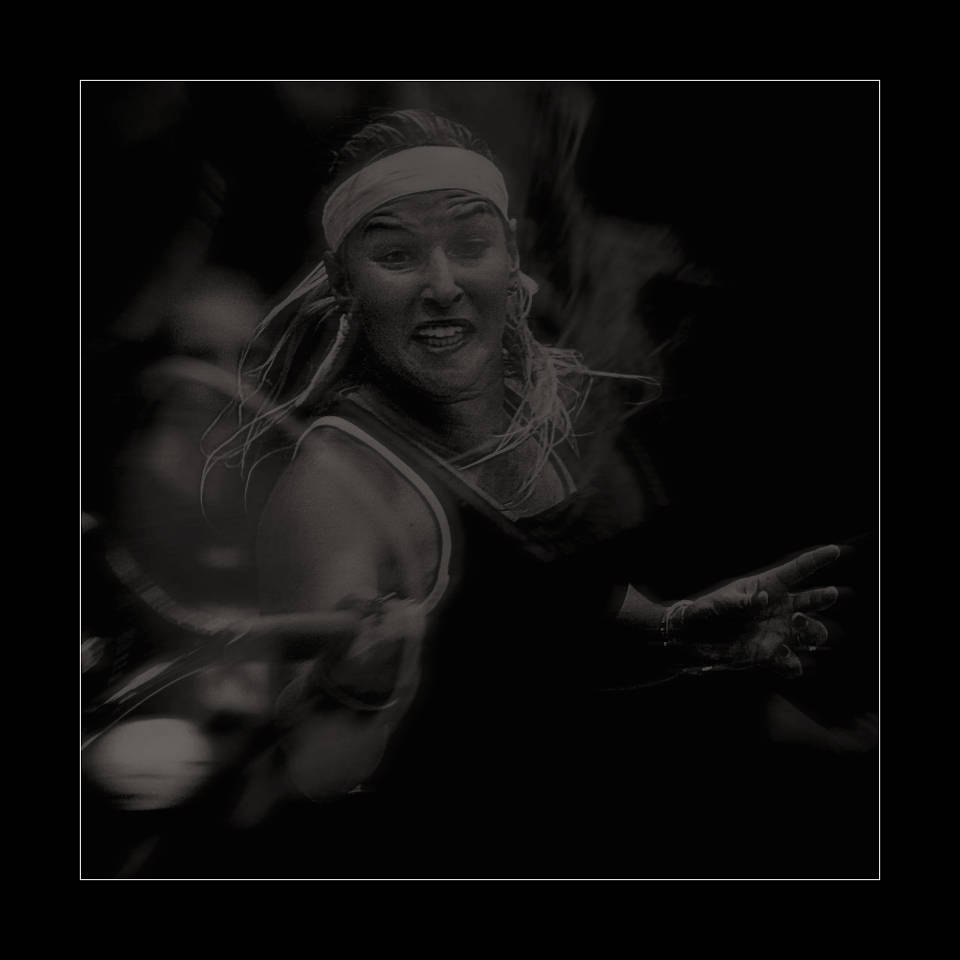
vigorous yet strangely weightless.
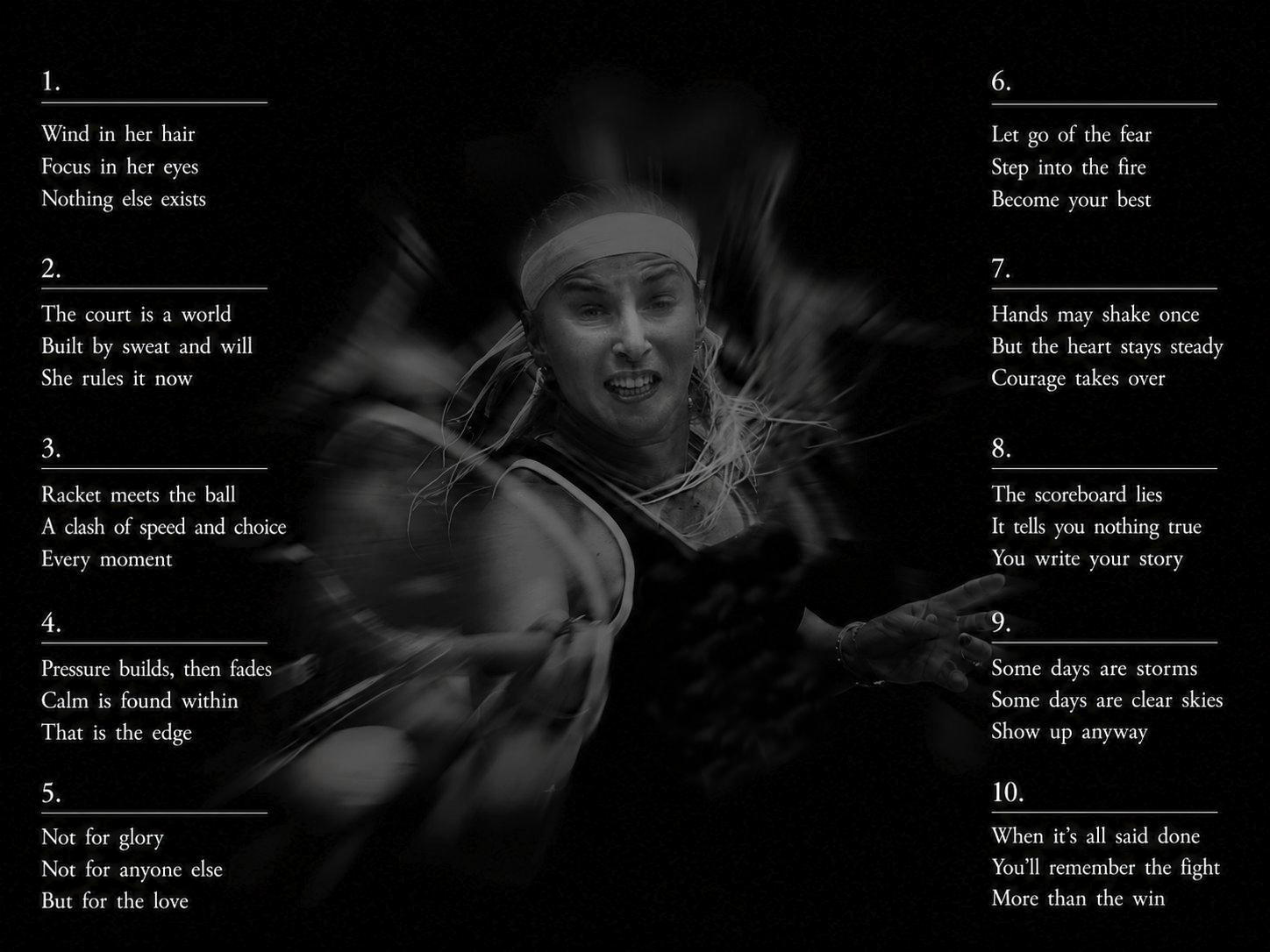

Dominika Cibulková – Overview
Dominika Cibulková (born 6 May 1989 in Bratislava, then Czechoslovakia) is a retired Slovak professional tennis player, former world No. 4, Australian Open finalist and 2016 WTA Finals champion. Despite standing only 1.61 m (5 ft 3 in), Cibulková developed into one of the most explosive and physically dynamic baseline players of her generation. She won eight WTA singles titles from 21 finals, reached at least the quarterfinals of every Grand Slam tournament and became the first Slovak woman to contest a Grand Slam singles final. She retired in November 2019 with a 450–299 career record and more than US$13.7 million in prize money.
Early Life
Cibulková was born and raised in Bratislava. Her parents are Milan and Katarína Cibulková. She was introduced to tennis by her parents and began playing seriously during childhood.
She initially combined tennis with other activities before the sport increasingly became the central focus of her life. Her compact build and extraordinary speed were evident early and ultimately became defining characteristics of her professional game.
Beginning Tennis
Cibulková began playing tennis at approximately seven to nine years of age. As a young player she developed primarily on clay and hard courts and learned to compensate for her lack of height through exceptional movement and aggressive positioning.
She admired Kim Clijsters, whose athletic baseline game provided a natural model for a shorter player attempting to compete against taller and more powerful opponents.
Junior Career
Cibulková became one of Slovakia's leading junior players and reached a career-high ITF junior ranking of world No. 3 on 23 May 2005.
Rather than remaining extensively in junior competition, she increasingly shifted toward professional tournaments during her mid-teens.
Professional Beginnings
Cibulková began playing professional events in the mid-2000s. Her early seasons were spent primarily on the ITF Women's Circuit, where she gradually accumulated ranking points and experience.
She progressed rapidly enough to enter the WTA Top 100 while still a teenager and soon became Slovakia's highest-profile young women's player.
Top-100 Breakthrough
Cibulková entered the WTA Top 100 in 2007. During the same season she began competing regularly in WTA main draws and Grand Slam tournaments.
Her compact but extremely aggressive game immediately distinguished her from many players of similar height.
First WTA Final – 2008
Cibulková reached her first WTA singles finals during the 2008 season. She advanced to championship matches in Amelia Island and Montreal, demonstrating that she could compete successfully at major tour events.
She finished the year inside the world's Top 20 for the first time.
Montreal 2008
At the Canadian Open in Montreal, Cibulková produced one of her first major international breakthroughs.
Her run included victories over several highly ranked opponents before she reached the final, where Dinara Safina defeated her.
The result established Cibulková as a serious threat at the highest WTA tournament level.
Roland Garros Semifinal – 2009
Cibulková achieved her first major Grand Slam breakthrough at Roland Garros in 2009.
She reached the semifinals after defeating Maria Sharapova 6–0, 6–2 in the quarterfinals, one of the most striking victories of her early career.
Dinara Safina defeated her in the semifinals.
Significance of Roland Garros 2009
Reaching a Grand Slam semifinal at age twenty established Cibulková firmly among the world's leading players.
Her performance against Sharapova demonstrated how effectively her speed, early ball striking and aggressive return game could neutralize significantly taller opponents.
US Open Quarterfinal – 2010
Cibulková reached the US Open quarterfinals in 2010, her best result at the New York major.
The run demonstrated that her success was not limited to clay and helped establish hard court as one of her most productive surfaces.
First WTA Title – Moscow 2011
Cibulková won her first WTA singles title at the Kremlin Cup in Moscow in October 2011.
After several previous runner-up finishes, securing a championship represented an important psychological breakthrough.
Wimbledon Quarterfinal – 2011
Cibulková reached her first Wimbledon quarterfinal in 2011.
She defeated then-world No. 1 Caroline Wozniacki during the tournament before losing to eventual champion Petra Kvitová in the quarterfinal.
The result demonstrated that even grass, where serving power is particularly valuable, could suit her aggressive return-oriented game.
2011 Season
In addition to winning Moscow and reaching the Wimbledon quarterfinals, Cibulková produced several strong WTA results during 2011.
She finished the season ranked world No. 18.
Carlsbad Champion – 2012
Cibulková won the Mercury Insurance Open in Carlsbad in 2012.
She defeated Marion Bartoli in the final to capture the second WTA singles championship of her career.
London Olympic Games – 2012
Cibulková represented Slovakia at the London Olympic Games in 2012.
It was her second Olympic appearance after Beijing 2008. She competed in women's singles but did not reach the medal rounds.
Doubles Career
Doubles was always secondary to Cibulková's singles career, but she nevertheless achieved a career-high doubles ranking of world No. 59 on 13 August 2012.
She did not win a WTA doubles title, concentrating the majority of her schedule and competitive ambitions on singles.
Stanford Champion – 2013
Cibulková won the Stanford tournament in 2013, defeating Agnieszka Radwańska in a dramatic three-set final.
The championship was another important hard-court result and prepared the foundation for the finest Grand Slam tournament of her career six months later.
Australian Open 2014
The defining Grand Slam tournament of Cibulková's career came at the 2014 Australian Open.
Entering as the No. 20 seed, she produced a series of outstanding performances to reach her first Grand Slam singles final.
Victory over Maria Sharapova
In the fourth round Cibulková faced third seed and former Australian Open champion Maria Sharapova.
After losing the opening set, she recovered impressively to win in three sets, recording another major victory over one of the sport's most prominent champions.
Australian Open Quarterfinal – 2014
Cibulková defeated Simona Halep 6–3, 6–0 in the quarterfinals.
The decisive performance demonstrated the exceptional form she had reached during the tournament.
Australian Open Semifinal – 2014
In the semifinals Cibulková faced Agnieszka Radwańska, who had eliminated defending champion Victoria Azarenka.
Cibulková dominated the match 6–1, 6–2 to reach her first Grand Slam singles final.
First Slovak Woman in a Grand Slam Final
By reaching the Australian Open final, Cibulková became the first woman representing independent Slovakia to contest a Grand Slam singles championship match.
The achievement made the tournament one of the most important moments in Slovak tennis history.
Australian Open Final – 2014
Cibulková faced China's Li Na in the championship match.
The first set was closely contested, but Li gradually assumed control and won 7–6, 6–0 to capture the title.
Although Cibulková finished runner-up, the tournament remained the greatest Grand Slam achievement of her career.
Acapulco Champion – 2014
Only weeks after Melbourne, Cibulková won the Acapulco title.
The championship confirmed that her Australian Open performance was part of a sustained period of exceptional form rather than an isolated tournament.
Miami Semifinal – 2014
Cibulková reached the semifinals of the Miami Open in 2014.
Li Na again defeated her, but the result helped push Cibulková toward the highest ranking of her career to that point.
Top-10 Breakthrough
Following her outstanding 2014 results, Cibulková entered the WTA Top 10 for the first time.
She finished the season ranked world No. 10.
Achilles Injury – 2015
Cibulková's progress was severely interrupted in 2015 by an Achilles tendon problem.
She underwent surgery and missed several months of competition, causing her ranking to decline substantially.
Return from Surgery
Cibulková returned to competition during the second half of 2015. Rebuilding confidence and physical conditioning required time, and she finished the season outside the world's Top 30.
The following year became one of the finest comeback seasons of her career.
Outstanding 2016 Season
Cibulková produced the strongest overall season of her professional career in 2016.
She reached seven WTA singles finals and won four championships while returning from outside the elite rankings to the very top of women's tennis.
Katowice Champion – 2016
Cibulková won the Katowice Open in April 2016, defeating Camila Giorgi in the final.
The title was her first since returning from Achilles surgery and provided an important boost in confidence.
Madrid Final – 2016
At the Madrid Open, Cibulková produced one of the best tournaments of her career on clay.
She advanced to the final before losing to Simona Halep. Reaching a Premier Mandatory-level championship match demonstrated that she had fully returned to elite competition.
Eastbourne Champion – 2016
Cibulková captured the Eastbourne grass-court title immediately before Wimbledon.
She defeated Karolína Plíšková in the final and entered Wimbledon in outstanding form.
Wimbledon Quarterfinal – 2016
Cibulková reached the Wimbledon quarterfinals for the second time in 2016.
Her run included a dramatic fourth-round victory over Agnieszka Radwańska before Elena Vesnina ended her tournament.
Wuhan Final – 2016
Cibulková reached another major final at Wuhan during the Asian swing.
Petra Kvitová defeated her in the championship match, but the result provided important ranking points in her race to qualify for the season-ending championships.
Linz Champion – 2016
Cibulková won the Linz title in October 2016.
The championship secured her qualification for the WTA Finals in Singapore for the first time.
WTA Finals – 2016
Cibulková entered the WTA Finals as one of eight leading players of the season.
She lost her first two round-robin matches, leaving her on the verge of elimination, but defeated Simona Halep in straight sets in her final group match and advanced to the semifinals through the tournament's tiebreak calculations.
WTA Finals Semifinal
In the semifinals Cibulková faced Svetlana Kuznetsova.
She recovered from losing the opening set and prevailed in three sets to reach the championship match.
WTA Finals Champion
Cibulková faced world No. 1 Angelique Kerber in the 2016 WTA Finals championship match.
She produced one of the finest performances of her career, defeating Kerber 6–3, 6–4 to capture the Billie Jean King Trophy.
The WTA Finals championship became the biggest title of Cibulková's career.
Historic Singapore Victory
Cibulková became the first player to win the WTA Finals on her tournament debut since Petra Kvitová in 2011.
Her championship was especially remarkable because she had begun the round-robin stage with two consecutive defeats.
2016 Year-End Ranking
Cibulková finished 2016 ranked world No. 5, then the highest year-end ranking of her career.
Her season included four titles, three additional finals and the WTA Finals championship.
Career-High Ranking
On 20 March 2017 Cibulková reached a career-high WTA singles ranking of world No. 4.
At the time it was the highest singles ranking ever achieved by a woman representing Slovakia.
2017 Season
Cibulková remained among the world's leading players during much of 2017 but did not reproduce the extraordinary title success of the previous season.
She reached the final in New Haven and several quarterfinals before finishing the year ranked No. 26.
2018 Season
Cibulková enjoyed a significant resurgence during 2018 and reached three WTA singles finals.
She finished runner-up in Budapest, Strasbourg and New Haven and returned to the later rounds of Wimbledon.
Wimbledon Quarterfinal – 2018
Cibulková reached her third Wimbledon quarterfinal in 2018.
Her run ended against eventual finalist Jeļena Ostapenko.
With quarterfinal appearances in 2011, 2016 and 2018, Wimbledon became statistically one of her most consistent Grand Slam tournaments.
2018 Year-End Ranking
Cibulková finished the 2018 season ranked world No. 25.
Despite being outside the Top 20, she remained capable of reaching major WTA finals and Grand Slam quarterfinals.
Final Season – 2019
Cibulková's 2019 season was increasingly affected by physical problems, particularly an Achilles injury.
She played relatively few tournaments and found it difficult to maintain the ranking and consistency of previous seasons.
Final Professional Match
Cibulková played the final match of her professional career at Roland Garros in May 2019.
She faced Aryna Sabalenka in the opening round and lost in straight sets.
Retirement
Cibulková formally announced her retirement from professional tennis on 12 November 2019 at the age of thirty.
The announcement coincided with publication of her autobiography, Tenis je môj život (“Tennis Is My Life”).
Reason for Retirement
Recurring physical problems played an important role in Cibulková's decision to stop competing. After fifteen years on tour, she concluded that continuing at the standard she demanded from herself was no longer realistic.
She retired while still young enough for a possible comeback but has not returned to professional competition.
Grand Slam Record
Cibulková recorded an 80–46 career singles record in Grand Slam main draws.
She reached at least the quarterfinals of all four majors, a distinction achieved by relatively few players of her generation.
Australian Open
The Australian Open produced the finest Grand Slam result of Cibulková's career.
She reached the final in 2014 and compiled a 19–12 career record in Melbourne.
Roland Garros
Cibulková reached the Roland Garros semifinals in 2009 and finished her career with a 21–12 record at the tournament.
Her 6–0, 6–2 quarterfinal victory over Maria Sharapova in 2009 remains one of her most memorable Grand Slam performances.
Wimbledon
Wimbledon was Cibulková's most productive major by total match victories. She compiled a 22–11 record at the All England Club.
She reached the quarterfinals in 2011, 2016 and 2018.
US Open
Cibulková reached the US Open quarterfinals in 2010 and finished her career with an 18–11 record in New York.
Although she never reproduced her Australian Open final there, she repeatedly reached the middle rounds.
WTA Singles Titles
Cibulková won eight WTA singles championships:
Moscow – 2011
Carlsbad – 2012
Stanford – 2013
Acapulco – 2014
Katowice – 2016
Eastbourne – 2016
Linz – 2016
WTA Finals Singapore – 2016
WTA Singles Finals
Cibulková reached 21 WTA singles finals during her career, winning eight and finishing runner-up thirteen times.
Her finals came on hard courts, clay, grass and indoor surfaces, demonstrating considerable versatility.
Playing Style
Cibulková was an aggressive right-handed baseliner with a two-handed backhand. Standing only 1.61 m, she was one of the shortest elite players on the WTA Tour.
Rather than treating her height as a limitation, she built a game around exceptional acceleration, early ball striking and explosive movement.
Forehand
The forehand was one of Cibulková's principal attacking weapons. She generated remarkable racquet-head speed for a player of her size and could produce winners from both central and wide positions.
Her ability to strike the forehand early allowed her to control rallies before taller opponents could establish their superior reach and serving power.
Backhand
Cibulková's two-handed backhand was compact, fast and exceptionally effective at redirecting pace.
The stroke was particularly dangerous down the line and enabled her to attack opponents who attempted to trap her in repeated crosscourt exchanges.
Return of Serve
The return was essential to Cibulková's success. Because her own serve could not produce the same number of free points as those of taller opponents, she needed to place substantial pressure on opposing service games.
Her quick reactions and compact swings allowed her to stand relatively close to the baseline and attack second serves aggressively.
Serve
The serve was naturally less dominant because of Cibulková's height. She compensated through placement, speed of delivery and an aggressive first groundstroke.
Her second serve could occasionally become vulnerable against strong returners, but she prevented opponents from dominating consistently through immediate movement and baseline pressure.
Movement
Movement was perhaps Cibulková's greatest physical strength. She possessed exceptional acceleration, balance and directional changes.
Her low center of gravity enabled her to defend difficult positions while remaining balanced enough to convert rapidly from defense into attack.
Physical Power
Despite her small stature, Cibulková was one of the most physically powerful players of her generation relative to body size.
Strong legs and core rotation allowed her to generate groundstroke speed comparable with significantly taller opponents.
Playing Inside the Baseline
Cibulková frequently attempted to position herself close to the baseline. Taking the ball early reduced the amount of court she needed to cover and deprived opponents of recovery time.
This tactical choice was essential to overcoming the natural reach disadvantage created by her height.
Competitive Temperament
Cibulková played with exceptional emotional intensity. Her fist pumps, vocal celebrations and energetic body language made her one of the most expressive players on tour.
The intensity could sometimes become exhausting, but at her best it generated momentum and helped her overcome stronger or higher-ranked opponents.
“Pome!”
Cibulková became associated with the Slovak expression “Pome!”, roughly meaning “Come on!” or “Let's go!”
She regularly shouted it during matches and it became part of her recognizable competitive personality.
Success Against Taller Opponents
A large proportion of Cibulková's career involved facing players considerably taller than herself, including Maria Sharapova, Petra Kvitová, Serena Williams and Karolína Plíšková.
Her success demonstrated that height was not an absolute requirement for elite modern women's tennis when compensated by speed, anticipation and early ball striking.
Victory over Maria Sharapova
Sharapova was one of the most prominent elite players against whom Cibulková produced major victories.
Her 6–0, 6–2 Roland Garros quarterfinal victory in 2009 and three-set Australian Open win in 2014 were among the signature performances of her career.
Matches Against Agnieszka Radwańska
Cibulková and Agnieszka Radwańska produced numerous contrasting tactical battles.
Radwańska relied on anticipation, touch and variation, while Cibulková attempted to impose greater pace. Their 2016 Wimbledon fourth-round match, won by Cibulková after an extended three-set struggle, became one of the most memorable encounters between them.
Matches Against Angelique Kerber
Angelique Kerber played a central role in Cibulková's greatest title run.
Kerber defeated her during the round-robin stage of the 2016 WTA Finals, but Cibulková reversed the result in the championship match, defeating the world No. 1 in straight sets.
Fed Cup
Cibulková represented Slovakia extensively in Fed Cup competition, now known as the Billie Jean King Cup.
She competed in twelve different seasons and played 22 ties for her country.
Fed Cup Record
Cibulková compiled a 22–11 singles record in Fed Cup competition.
Her national-team participation stretched from her teenage years through 2019 and made her one of Slovakia's most important team players of the period.
Olympic Games
Cibulková represented Slovakia at two Olympic Games: Beijing 2008 and London 2012.
She did not win an Olympic medal, but repeated qualification reflected her position among Slovakia's leading athletes.
Slovak Tennis
Cibulková became one of the most successful players representing independent Slovakia.
Her Australian Open final, WTA Finals championship and career-high ranking of No. 4 established standards that placed her alongside the most accomplished Slovak tennis players of the modern era.
WTA Finals Legacy
The 2016 WTA Finals championship is arguably even more important to Cibulková's career résumé than her Australian Open runner-up finish.
She defeated the year-end world No. 1 in the final and became champion at the most prestigious event outside the four Grand Slams.
Career Prize Money
Cibulková earned US$13,725,520 in official WTA career prize money.
The total reflected fifteen years of competition at the highest international level, including more than 700 professional singles matches.
Professional Record
Cibulková retired with a WTA-recorded singles record of 450 victories and 299 defeats.
Her 450 victories represent a winning percentage of approximately 60 percent across a career spent predominantly at tour level.
Life After Tennis
After retirement Cibulková remained involved in tennis and business activities in Bratislava.
She has been closely associated with the Love4Tennis Dominika Cibulková Academy, which provides coaching and development opportunities for younger players.
Autobiography
Cibulková published her memoir Tenis je môj život (“Tennis Is My Life”) in November 2019.
The publication coincided with her retirement announcement and reflects on her professional career and life within elite tennis.
Charitable Activities
Cibulková has been involved with the charitable initiative “So The Stars Never Fade.”
The project provides financial and social support to Slovak athletes who face difficulties adjusting to life after competitive sport.
Business Activities
Since retirement Cibulková has been involved in several business ventures in Bratislava, including hospitality-related projects and a children's store.
She has therefore developed a public career outside tennis while maintaining links to the sport through her academy.
Personal Life
Cibulková married Michal Navara in 2016.
The couple have two children: son Jakub, born in June 2020, and daughter Nina, born in March 2023.
Career Highlights
Full name: Dominika Cibulková
Born: 6 May 1989, Bratislava, Czechoslovakia
Nationality: Slovak
Height: 1.61 m (5 ft 3 in)
Plays: Right-handed, two-handed backhand
Started playing tennis: Childhood, approximately age 7–9
Preferred surfaces: Hard court and clay
Favorite shot: Swing volley
Career-high junior ranking: No. 3 (23 May 2005)
Career-high WTA singles ranking: No. 4 (20 March 2017)
Career-high WTA doubles ranking: No. 59 (13 August 2012)
WTA singles titles: 8
WTA singles finals: 21
WTA Finals champion: 2016
Australian Open: Finalist (2014)
Roland Garros: Semifinal (2009)
Wimbledon: Quarterfinal (2011, 2016, 2018)
US Open: Quarterfinal (2010)
Grand Slam singles record: 80–46
Australian Open record: 19–12
Roland Garros record: 21–12
Wimbledon record: 22–11
US Open record: 18–11
Olympic Games: Beijing 2008, London 2012
Fed Cup singles record: 22–11
Career singles record: 450–299
Career prize money: US$13,725,520
2014 year-end ranking: No. 10
2016 year-end ranking: No. 5
Career-high ranking year: 2017
Final professional match: Roland Garros 2019
Retired: 12 November 2019
Current status: Retired
Career Trajectory
Cibulková's career developed steadily rather than through one immediate teenage breakthrough. She entered the Top 100 in 2007, reached major WTA finals in 2008 and advanced to her first Grand Slam semifinal at Roland Garros in 2009.
Her first title arrived in Moscow in 2011, followed by championships in Carlsbad and Stanford. The 2014 Australian Open then elevated her career to another level. Victories over Maria Sharapova, Simona Halep and Agnieszka Radwańska carried her into the final and made her the first Slovak woman to reach a Grand Slam singles championship match.
An Achilles injury interrupted her momentum in 2015, but the response was remarkable. Cibulková returned to produce the finest complete season of her career in 2016, reaching seven finals, winning four titles and defeating world No. 1 Angelique Kerber to capture the WTA Finals championship.
She reached world No. 4 in March 2017 and remained capable of major results through 2018, including a third Wimbledon quarterfinal. Recurring physical problems increasingly affected her in 2019, leading to retirement at age thirty.
Legacy
Cibulková's career holds particular significance because she succeeded at the highest level despite possessing none of the physical height advantages increasingly common in modern women's tennis. At 1.61 m, she reached world No. 4, contested a Grand Slam final and defeated numerous major champions.
Her success provided an important demonstration that anticipation, acceleration, early ball striking and exceptional physical conditioning could compensate for a substantial disadvantage in serving leverage and reach.
For Slovak tennis, her achievements were historic. She became the first Slovak woman to reach a Grand Slam singles final and achieved the highest ranking attained by a Slovak woman during her era.
Assessment
Dominika Cibulková was one of the most distinctive elite players of the 2010s. Her eight WTA singles titles alone do not fully capture her level: she reached 21 finals, made deep runs at every Grand Slam and repeatedly defeated players who possessed considerably greater height and raw serving power.
The 2014 Australian Open and 2016 WTA Finals define the two principal peaks of her career. In Melbourne she became Slovakia's first female Grand Slam singles finalist; in Singapore she defeated the year-end world No. 1 to win the largest title of her career.
Her game was built around extraordinary movement, explosive groundstrokes, an aggressive return and a refusal to surrender court position. Combined with a highly expressive competitive personality, these qualities made Cibulková one of the most recognizable players of her generation.
Retiring at thirty prevented her from adding the extended late-career chapter enjoyed by some contemporaries, but her historical position is secure: former world No. 4, Australian Open finalist, WTA Finals champion and one of the greatest players produced by Slovak women's tennis.
all texts by ChatGPT