
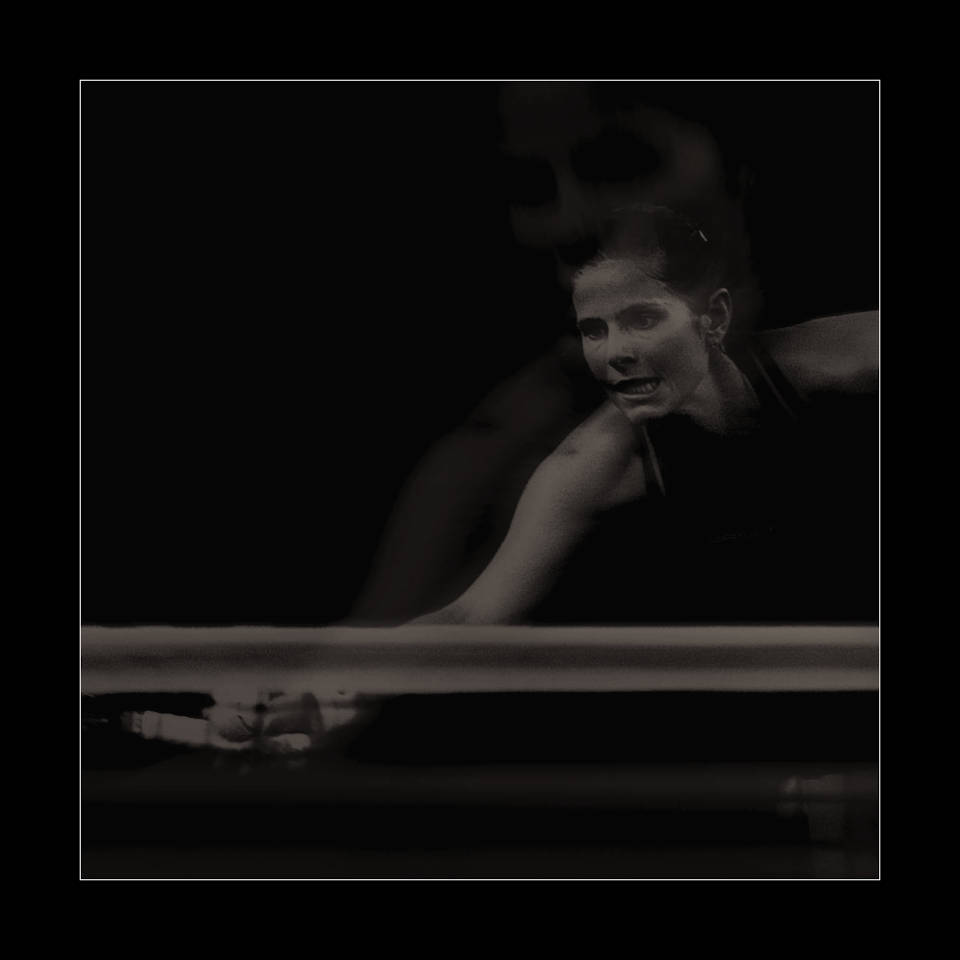
negotiating with gravity on its own terms.
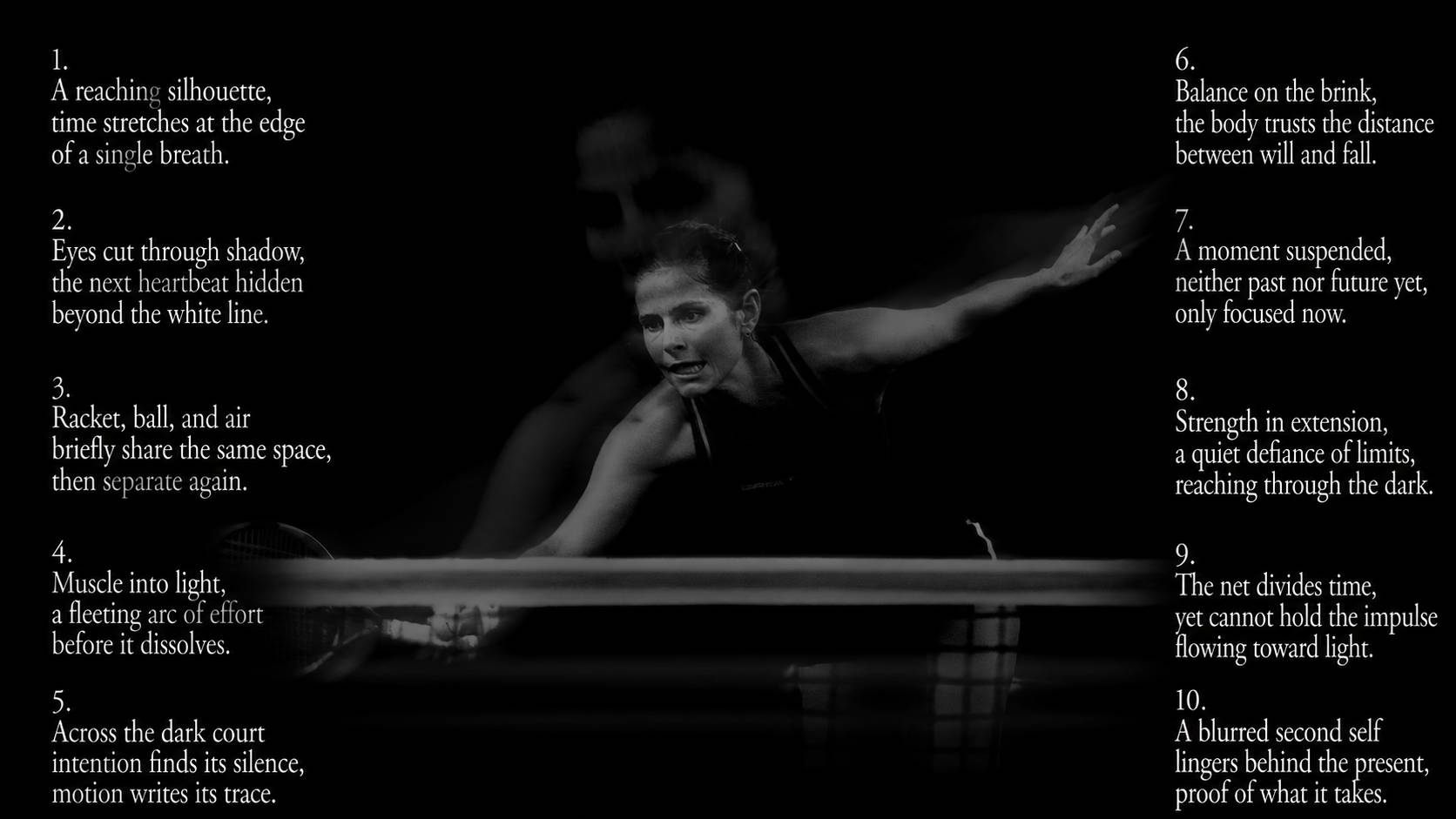
Julia Görges – Overview
Julia Görges (born 2 November 1988 in Bad Oldesloe, West Germany) is a retired German professional tennis player who reached a career-high singles ranking of world No. 9 on 20 August 2018 and a career-high doubles ranking of No. 12 on 22 August 2016. A powerful right-handed player with a two-handed backhand, she won seven WTA singles titles and five WTA doubles titles. Her greatest Grand Slam achievement was reaching the Wimbledon semifinals in 2018, while her most celebrated tour victories included the 2011 Stuttgart title and the 2017 WTA Elite Trophy in Zhuhai. Görges retired in October 2020 after a 15-year professional career.
Early Life
Görges was born in Bad Oldesloe in Schleswig-Holstein. Her parents, Klaus and Inge Görges, worked in insurance, while her older half-sister Maike also played tennis recreationally.
She began playing tennis at approximately five years of age and developed through clubs in northern Germany. Unlike some elite players who were identified as obvious international stars very young, Görges progressed relatively gradually through junior and lower-level professional competition.
Professional Beginnings
Görges began playing professional tournaments in 2005. Her first seasons were spent primarily on the ITF Women's Circuit, where she accumulated ranking points and experience before becoming a regular WTA competitor.
She made her first substantial move up the rankings in 2007 and 2008, reaching WTA main draws and gradually progressing toward the Top 100.
First WTA Success
Görges reached her first WTA Tour semifinal at Stockholm in 2008. The result helped her finish that season close to the Top 100.
During 2009 she consolidated her tour position and increasingly competed directly in WTA main draws rather than relying primarily on ITF tournaments.
First WTA Title – Bad Gastein 2010
Görges won her first WTA singles title at Bad Gastein in Austria in 2010. She defeated Timea Bacsinszky in the final.
The clay-court championship represented the first major breakthrough of her professional career and helped carry her into the world's Top 50.
Luxembourg Final – 2010
Later in 2010 Görges reached another WTA final in Luxembourg. Although she did not win the title, the result confirmed that her Bad Gastein championship was not an isolated success.
She finished 2010 ranked world No. 40, the first year in which she established herself securely among the leading WTA players.
Stuttgart Champion – 2011
The defining early title of Görges's career came at the 2011 Porsche Tennis Grand Prix in Stuttgart. Playing in front of a German crowd at one of the strongest tournaments on the calendar, she defeated world No. 1 Caroline Wozniacki 7–6, 6–3 in the final.
Her run also included victories over players such as Samantha Stosur and Sabine Lisicki. Winning Stuttgart elevated Görges from promising Top-40 player to internationally recognized contender.
Madrid 2011
Only weeks after Stuttgart, Görges defeated Caroline Wozniacki again at the Madrid Open, confirming that the Stuttgart victory had not been a one-off upset.
She reached the semifinals in Madrid, her best result at what would now be regarded as WTA 1000 level.
Rise Toward the Top 20
Görges's excellent 2011 season carried her to world No. 16 and a year-end ranking of No. 21.
Her powerful serve and forehand had developed into genuine elite-level weapons, particularly on clay and hard courts where she could establish attacking positions early in rallies.
2012 Season
Görges continued performing at a high level in 2012. She reached the final of the Dubai Championships and another final in Linz.
She also produced solid Grand Slam results and finished the season ranked world No. 18, one of the strongest year-end positions of the first phase of her career.
Australian Open
Görges reached the fourth round of the Australian Open three times, in 2012, 2013 and 2015.
The tournament was one of her most consistent Grand Slams, although she never progressed beyond the round of 16 in Melbourne.
Roland Garros
Görges's best Roland Garros singles result was the fourth round in 2015.
Clay suited her heavy forehand and strong first serve, but despite her Stuttgart title and other excellent clay-court results, she never reached a Grand Slam quarterfinal in Paris.
US Open
Görges reached the US Open fourth round twice, in 2017 and 2019.
Her 2017 run formed part of the late-career resurgence that eventually carried her into the Top 10.
Middle-Career Difficulties
After the strong 2011–12 period, Görges experienced several more difficult seasons. Between 2013 and 2016 her ranking generally fluctuated between approximately No. 40 and No. 80.
Although she continued to produce isolated strong tournament results, inconsistency prevented her from returning immediately to the level she had reached in 2011 and 2012.
Doubles Development
Doubles became an increasingly important part of Görges's career during this period. Her strong serve, aggressive returns and comfort at the net made her an effective partner.
She eventually reached world No. 12 in doubles, considerably higher than many established singles specialists.
WTA Doubles Titles
Görges won five WTA doubles titles during her career. Her championships included Copenhagen in 2010, Bad Gastein in 2012 and New Haven in 2015.
She partnered a wide range of players, including Jill Craybas, Lucie Hradecká and Karolína Plíšková.
Partnership with Karolína Plíšková
Görges formed a particularly successful doubles partnership with Karolína Plíšková. Their complementary power games made them highly effective on faster surfaces.
The pair qualified for the WTA Finals doubles competition in 2016. Görges reached her career-high doubles ranking of world No. 12 in August of that year.
Career Revival – 2017
At age 28, Görges began one of the most remarkable late-career improvements on the WTA Tour. After several years outside the elite, she rebuilt both her game and confidence during 2017.
She reached finals in Mallorca, Bucharest and Washington before finally converting her improved form into titles during the autumn.
Moscow Champion – 2017
Görges ended a six-year WTA singles title drought by winning the Kremlin Cup in Moscow in October 2017.
The championship carried enormous psychological significance. Having lost several finals earlier in the season, she finally translated her excellent form into a trophy.
WTA Elite Trophy Champion – 2017
Görges completed her spectacular 2017 season by winning the WTA Elite Trophy in Zhuhai.
She defeated Coco Vandeweghe in the final to capture one of the largest titles of her career. The victory extended her winning streak to nine matches and helped her finish the year ranked No. 14.
2017 Season in Perspective
Görges won 48 matches during 2017 and reached seven WTA finals. Her season represented a complete competitive transformation after several years of fluctuating results.
Rather than declining as she entered her late twenties, she became a substantially more consistent player and began the strongest phase of her career.
Auckland Champion – 2018
Görges began 2018 by winning the Auckland title. The championship extended her winning streak from the end of 2017 and confirmed that her late-season surge had carried into the new year.
She defeated Caroline Wozniacki in the final.
First Top-10 Ranking
On 5 February 2018 Görges entered the WTA Top 10 for the first time.
She became the eighth German woman to reach the Top 10, joining a distinguished group that included Steffi Graf, Anke Huber, Andrea Petkovic and Angelique Kerber.
Charleston Final – 2018
Görges continued her strong season by reaching the final of the Charleston tournament on green clay.
She lost the championship match to Kiki Bertens but accumulated further ranking points and demonstrated continued consistency across surfaces.
Wimbledon 2018
The greatest Grand Slam tournament of Görges's career came at Wimbledon in 2018.
She entered as the No. 13 seed and advanced through the draw to reach her first Grand Slam quarterfinal and then her first semifinal.
Wimbledon Quarterfinal
Görges defeated Kiki Bertens in the quarterfinal to advance to the final four.
The result was particularly important because Görges had previously reached the second week of majors without ever breaking through to a quarterfinal.
Wimbledon Semifinal Against Serena Williams
In the Wimbledon semifinal Görges faced seven-time champion Serena Williams, who was making a major comeback after childbirth.
Williams defeated Görges 6–2, 6–4. Despite the loss, reaching the semifinals represented the finest Grand Slam performance of Görges's career.
Career-High Ranking
Following her excellent 2018 season, Görges reached a career-high singles ranking of world No. 9 on 20 August 2018.
She finished the season ranked No. 14, completing consecutive year-end Top-15 finishes.
Luxembourg Champion – 2018
Görges won the Luxembourg Open in October 2018, defeating Belinda Bencic in the final.
The title was her third championship within approximately twelve months and reinforced the remarkable consistency of her late-career peak.
Auckland Champion – 2019
Görges successfully defended her Auckland title in January 2019.
She defeated Canadian Bianca Andreescu in the final after recovering from a difficult position. Andreescu would later win the 2019 US Open.
The Auckland championship became the seventh and final WTA singles title of Görges's career.
Birmingham Final – 2019
Görges reached the Birmingham grass-court final in 2019, continuing her strong record on the surface following the previous year's Wimbledon semifinal.
Ashleigh Barty defeated her in the championship match.
Luxembourg Final – 2019
Görges also returned to the Luxembourg final in 2019 while attempting to defend her title.
She finished runner-up but ended the season ranked No. 28, remaining comfortably inside the world's Top 30.
Final Season – 2020
The 2020 season was heavily disrupted by the COVID-19 pandemic. Görges played relatively few tournaments and struggled to establish momentum after the tour resumed.
Her final professional tournament was Roland Garros, where she lost in the second round to Laura Siegemund.
Retirement
Görges announced her retirement from professional tennis on 21 October 2020 at the age of 31.
She explained that she felt satisfied with what she had achieved and was ready to begin a new stage of her life. Her retirement ended a 15-year professional career.
48 Consecutive Grand Slam Main Draws
One of the clearest measures of Görges's durability was her run of 48 consecutive Grand Slam singles main-draw appearances.
The streak stretched across twelve years and reflected exceptional longevity and consistency, even during seasons when her ranking was below its peak.
Grand Slam Record
Görges compiled a 54–49 career singles record in Grand Slam main draws.
Her best result was the 2018 Wimbledon semifinal. She also reached the Australian Open fourth round three times, Roland Garros fourth round once and US Open fourth round twice.
Playing Style
Görges was an aggressive right-handed baseliner with a two-handed backhand. At 1.80 m (5 ft 11 in), she possessed substantial serving leverage and one of the heavier forehands on the WTA Tour.
Her game was constructed around first-strike tennis: a strong serve, aggressive return position and attempts to dictate quickly with the forehand.
Serve
The serve was one of Görges's principal weapons. She could generate both pace and kick, particularly on the first delivery, and regularly accumulated large numbers of aces.
Her service motion was technically smooth and became increasingly reliable during the late-career period when she reached the Top 10.
Forehand
The forehand was Görges's signature groundstroke. She generated substantial topspin and weight while retaining the ability to flatten the ball for outright winners.
Her inside-out forehand was especially effective, allowing her to control rallies from the backhand corner and open space for the next attack.
Backhand
Görges used a two-handed backhand. Although the forehand generally provided more spectacular offense, the backhand was solid and capable of redirecting pace effectively.
Improved stability from the backhand side was one of the factors contributing to her more consistent results after 2017.
Return of Serve
Görges was an aggressive returner who frequently attempted to attack second serves rather than simply begin neutral rallies.
Her return positioning allowed her to use the first groundstroke immediately as an offensive weapon, particularly on hard courts.
Net Play
Her extensive doubles experience helped Görges develop confidence at the net. Although primarily a baseliner, she was comfortable finishing points with volleys and increasingly incorporated forward movement into her singles game.
This ability was particularly useful on grass and faster hard courts.
Grass-Court Development
Grass became increasingly productive during the later stages of Görges's career. Her 2018 Wimbledon semifinal and 2019 Birmingham final were the principal examples.
The surface rewarded her serve, aggressive forehand and willingness to finish points quickly.
Clay-Court Strength
Clay also played a major role throughout Görges's career. Her first title came at Bad Gastein, while Stuttgart 2011 remains one of her most celebrated victories.
Unlike many pure power players, she generated sufficient topspin to remain highly effective on slower clay courts.
German Golden Generation
Görges belonged to an exceptional generation of German women's tennis alongside Angelique Kerber, Andrea Petkovic, Sabine Lisicki and later players such as Mona Barthel.
Four members of this broad generation reached the WTA Top 15, while Kerber became world No. 1 and a multiple Grand Slam champion.
Görges described being part of this group as one of the memorable elements of her career.
Billie Jean King Cup
Görges represented Germany extensively in Fed Cup competition, now known as the Billie Jean King Cup.
She played both singles and doubles and was part of the German team during one of the country's strongest modern periods.
Fed Cup Final – 2014
Germany reached the Fed Cup final in 2014, facing the Czech Republic in Prague.
The Czech team won the championship, but reaching the final represented Germany's best result in the competition for more than two decades.
Olympic Games
Görges represented Germany at the London 2012 Olympic Games.
She defeated second seed Agnieszka Radwańska in the first round, one of the most notable victories of the Olympic tennis tournament, before eventually reaching the third round.
She also competed in women's doubles.
Career Titles
Görges won seven WTA singles titles:
Bad Gastein – 2010
Stuttgart – 2011
Moscow – 2017
WTA Elite Trophy Zhuhai – 2017
Auckland – 2018
Luxembourg – 2018
Auckland – 2019
Singles Finals
In addition to her seven titles, Görges reached ten further WTA singles finals, giving her 17 championship-match appearances during her career.
Her runner-up finishes included Dubai and Linz in 2012, Charleston in 2018 and Birmingham and Luxembourg in 2019.
Doubles Career
Görges reached world No. 12 in doubles and won five WTA doubles titles.
Her doubles results made her one of only a small number of German women to reach the Top 15 in both singles and doubles.
Career Statistics
Full name: Julia Görges
Born: 2 November 1988, Bad Oldesloe, West Germany
Nationality: German
Height: 1.80 m (5 ft 11 in)
Plays: Right-handed, two-handed backhand
Turned professional: 2005
Retired: October 2020
Career-high singles ranking: No. 9 (20 August 2018)
Career-high doubles ranking: No. 12 (22 August 2016)
WTA singles titles: 7
WTA singles finals: 17
WTA doubles titles: 5
Career singles record: 479–337
Career prize money: US$9,913,953
Best Australian Open result: Fourth round (2012, 2013, 2015)
Best Roland Garros result: Fourth round (2015)
Best Wimbledon result: Semifinal (2018)
Best US Open result: Fourth round (2017, 2019)
Best WTA 1000-level result: Semifinal, Madrid (2011)
WTA Elite Trophy champion: 2017
Stuttgart champion: 2011
Olympic Games: London 2012
Fed Cup finalist: 2014
Consecutive Grand Slam main draws: 48
2017 year-end ranking: No. 14
2018 year-end ranking: No. 14
2019 year-end ranking: No. 28
Current status: Retired
Career Trajectory
Görges's career developed in three distinctive phases. She progressed gradually through the ITF and lower WTA levels before breaking through with her first title in 2010 and the prestigious Stuttgart championship in 2011. By 2012 she had reached the Top 20 and appeared established among the leading players on tour.
A prolonged middle period followed in which she remained a strong professional but struggled to maintain elite-level consistency. Between 2013 and 2016 her ranking frequently sat between the Top 40 and Top 80, although her doubles career flourished and ultimately carried her to world No. 12.
The final phase was the most remarkable. Beginning in 2017, Görges transformed her singles career at an age when many players begin declining. She reached seven finals that season, won Moscow and the WTA Elite Trophy, entered the Top 10 in 2018 and reached the Wimbledon semifinals.
She maintained a Top-30 position through 2019 before retiring in 2020 at age 31, satisfied that she had reached a level considerably beyond what had once appeared possible during her more difficult middle seasons.
Assessment
Julia Görges's career is distinguished by longevity, late development and the quality of her peak rather than by Grand Slam titles. Seven WTA singles championships, five doubles titles, a Top-10 singles ranking and Top-15 doubles ranking constitute an unusually balanced résumé.
Her 2011 Stuttgart championship remains one of the signature moments of her early career, while the 2017–18 resurgence is perhaps even more impressive. At 29 she entered the Top 10 for the first time and reached her only Grand Slam semifinal at Wimbledon, demonstrating that a player's best tennis need not arrive in her early twenties.
Her 48 consecutive Grand Slam main-draw appearances also underline her durability. With 479 career singles victories, almost US$10 million in prize money and major success in both singles and doubles, Görges established herself as an important member of Germany's exceptional modern generation and one of the most accomplished German players outside the country's Grand Slam champions.
all texts by ChatGPT