

the private vigilance of someone negotiating speed before certainty can exist.
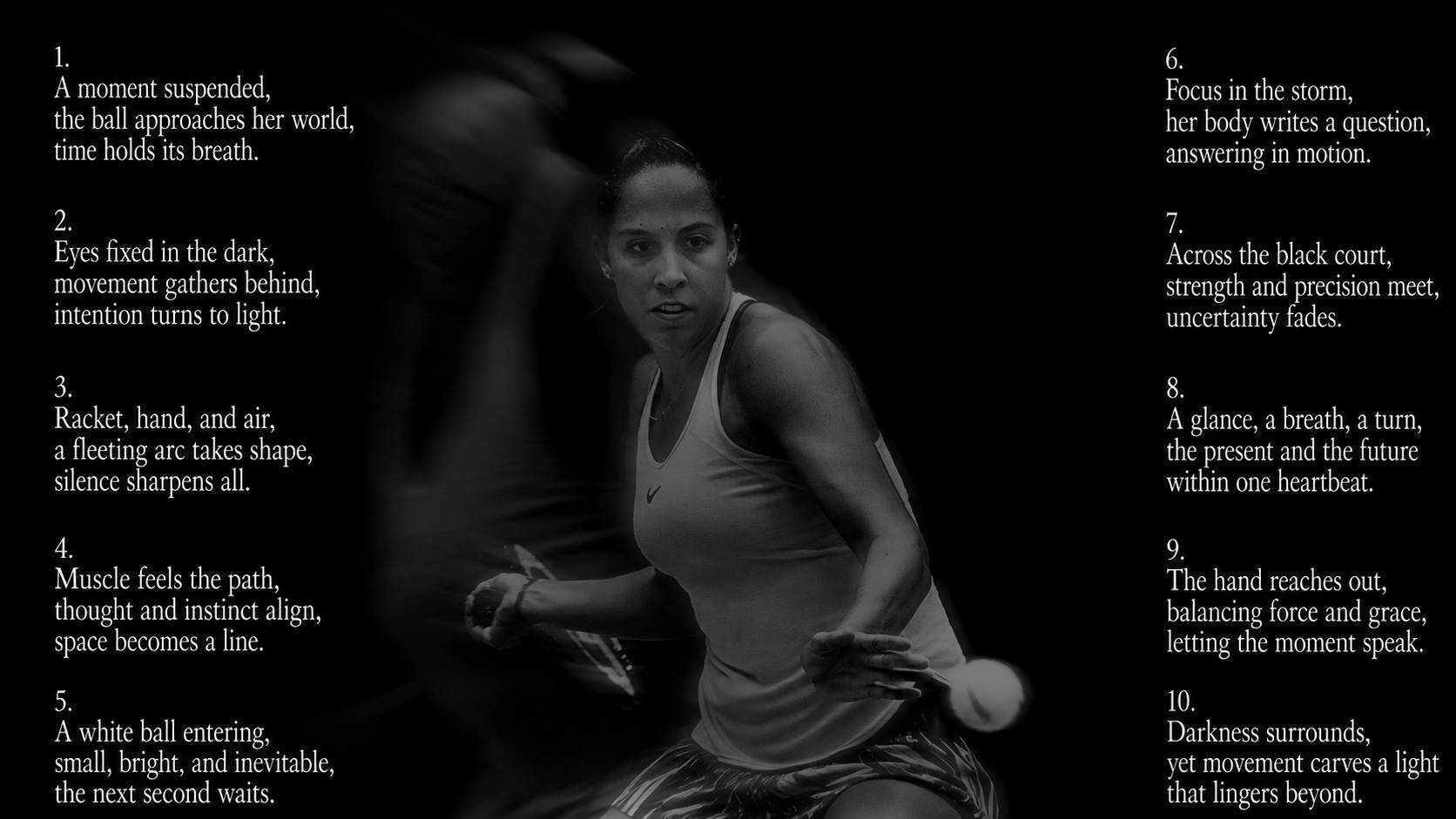


Madison Keys – Overview
Madison Keys (born 17 February 1995 in Rock Island, Illinois) is an American professional tennis player, Grand Slam champion and one of the leading power players of her generation. A right-handed player with a two-handed backhand, Keys reached a career-high WTA singles ranking of world No. 5 in February 2025. Her defining achievement came at the 2025 Australian Open, where she defeated Iga Świątek in a dramatic semifinal and two-time defending champion Aryna Sabalenka in the final to win her first Grand Slam title. She had previously reached the 2017 US Open final and multiple major semifinals. By 2026 she had won eleven WTA singles titles, including Cincinnati, Charleston, Adelaide and three championships at Eastbourne.
Early Life
Keys was born in Rock Island, Illinois, and grew up in the Quad Cities area. Her mother is Christine, and she has three siblings: Sydney, Montana and Hunter.
She became interested in tennis after watching the sport on television as a young child. Seeing Venus Williams compete was particularly influential, and Keys began asking to play tennis herself.
Beginning Tennis
Keys started playing seriously at approximately four years of age. Her natural athleticism and powerful ball striking became apparent very early.
As a child she trained at the Quad-City Tennis Club before moving to Florida to develop her game at the Evert Tennis Academy.
Evert Tennis Academy
Keys moved to Florida with her family when she was approximately ten to train at the Evert Tennis Academy in Boca Raton.
Working in a high-performance environment accelerated her development and exposed her to stronger competition. Chris Evert became one of several important figures in Keys's early tennis education.
Junior Development
Keys enjoyed a strong junior career but moved toward professional tennis unusually early. She reached a career-high junior ranking around world No. 12 and competed in major junior tournaments while already gaining experience against adults.
Her combination of height, serving power and explosive groundstrokes made her one of the most closely watched American prospects of her generation.
Professional Debut
Keys made her professional debut in 2009. At only fourteen years old she received a wildcard into the WTA tournament at Ponte Vedra Beach.
She defeated Alla Kudryavtseva in the opening round, becoming one of the youngest players ever to win a WTA Tour main-draw match. She was 14 years and 48 days old.
Early ITF Career
Keys spent the following seasons combining junior competition with ITF professional tournaments. She won her first ITF singles title at a $10,000 event in Cleveland in 2010.
She added two further ITF titles in 2012 and gradually progressed from outside the Top 600 toward regular WTA and Grand Slam competition.
First Grand Slam Victory
Keys earned her first Grand Slam main-draw victory at the 2011 US Open, defeating Jill Craybas in the opening round.
She lost to Lucie Šafářová in the second round, but the tournament demonstrated that the sixteen-year-old American could already compete effectively at major level.
Top-100 Breakthrough – 2013
The 2013 season established Keys as a regular WTA player. She began the year outside the Top 100 but quickly climbed through the rankings.
At Sydney she defeated world No. 17 Lucie Šafářová for her first Top-20 victory. Later at Madrid she defeated world No. 5 Li Na, recording her first Top-10 win.
Keys finished 2013 ranked world No. 37.
First WTA Title – Eastbourne 2014
Keys won her first WTA singles championship on the grass courts of Eastbourne in June 2014.
She defeated Angelique Kerber in a high-quality three-set final. At nineteen, Keys became the youngest American woman to win a WTA singles title since Vania King in 2006.
Grass-Court Strength
Eastbourne became one of the tournaments most closely associated with Keys's career. Her serve and flat, powerful groundstrokes are naturally suited to grass, where points move quickly and aggressive first-strike tennis is rewarded.
She would eventually win the tournament three times, in 2014, 2023 and 2026.
Australian Open Breakthrough – 2015
Keys produced her first major Grand Slam breakthrough at the 2015 Australian Open. Ranked outside the Top 30 when the tournament began, she advanced to the semifinals at only nineteen.
Her run included a victory over fourth seed Petra Kvitová and a dramatic quarterfinal win over Venus Williams.
Serena Williams defeated Keys in the semifinals, but the result propelled her into the world's Top 20 for the first time.
Charleston Final – 2015
Keys reached the final of the Charleston tournament on green clay in 2015. She lost a close championship match to Angelique Kerber.
The result demonstrated that her power game could be effective on slower surfaces as well as grass and hard courts.
Wimbledon Quarterfinal – 2015
Keys reached her first Wimbledon quarterfinal in 2015. Her run reinforced her reputation as one of the strongest young grass-court players on the WTA Tour.
Agnieszka Radwańska defeated her in three sets in the quarterfinal.
2016 Season
Keys made another major ranking advance during 2016. She reached finals in Rome and Montreal, won Birmingham on grass and entered the WTA Top 10 for the first time.
On 20 June 2016 she became the first American woman since Serena Williams in 1999 to make her Top-10 debut at such a young stage of her career.
Birmingham Champion – 2016
Keys captured the Birmingham title in June 2016, defeating Barbora Strýcová in the final.
The championship was her second WTA title and strengthened her already impressive grass-court résumé.
Rome Final – 2016
Keys reached the final of the Italian Open in Rome in 2016, one of the most prestigious clay-court tournaments on the calendar.
Serena Williams defeated her in the championship match. Reaching the final nevertheless demonstrated significant improvement on clay.
Montreal Final – 2016
Keys reached another major final at the Canadian Open in Montreal later in 2016.
Simona Halep defeated her in the final, but the result helped Keys secure qualification for the WTA Finals.
WTA Finals – 2016
Keys qualified for the season-ending WTA Finals in Singapore for the first time in 2016.
She recorded one victory in round-robin play, defeating Dominika Cibulková, but did not advance to the semifinals.
She finished the season ranked world No. 8.
Rio Olympic Games
Keys represented the United States at the 2016 Rio Olympic Games and produced an excellent singles tournament.
She reached the semifinals before losing to eventual silver medalist Angelique Kerber. Keys then faced Petra Kvitová in the bronze-medal match and lost in three sets, finishing fourth.
Wrist Injuries
Keys underwent surgery on her left wrist following the 2016 season. The injury delayed the start of her 2017 campaign.
She later required another procedure, making wrist problems one of the more significant physical challenges of the middle portion of her career.
Stanford Champion – 2017
Keys returned to title-winning form at Stanford in August 2017. She defeated fellow American Coco Vandeweghe in the final.
The championship arrived immediately before the greatest US Open run of her career.
US Open 2017
Keys produced a superb tournament at the 2017 US Open, advancing to her first Grand Slam singles final.
Her run included victories over Elena Vesnina, Elina Svitolina and Kaia Kanepi before she defeated Coco Vandeweghe in the semifinals.
All-American US Open Final
Keys faced close friend and fellow American Sloane Stephens in the 2017 US Open final.
Stephens produced an outstanding defensive performance and won 6–3, 6–0. Keys later acknowledged that nerves and the magnitude of the occasion contributed to her difficulty producing her normal aggressive tennis.
The defeat remained the closest Keys came to a Grand Slam title for more than seven years.
2018 Australian Open
Keys reached the Australian Open quarterfinals in 2018, losing to eventual champion Angelique Kerber.
Her consistent Grand Slam results were increasingly demonstrating that she could challenge for major titles on several surfaces.
Roland Garros Semifinal – 2018
Keys achieved her best French Open result in 2018 by reaching the semifinals.
She advanced without losing a set before again facing Sloane Stephens. Stephens defeated her in straight sets.
The result gave Keys Grand Slam semifinal appearances on hard court and clay.
US Open Semifinal – 2018
Keys returned to the US Open semifinals in 2018, producing another deep run one year after reaching the final.
Naomi Osaka defeated her in the semifinals and subsequently won the championship.
Charleston Champion – 2019
Keys captured one of her favorite titles at Charleston in 2019. Her run included victories over Sloane Stephens and Caroline Wozniacki.
She defeated Wozniacki in the final to win her first championship on clay.
Cincinnati Champion – 2019
Keys won the largest regular WTA title of her career at Cincinnati in August 2019.
She defeated former Grand Slam champions Simona Halep, Venus Williams and Svetlana Kuznetsova during the tournament, beating Kuznetsova in the final.
The title remains Keys's first WTA 1000 championship.
Return to the Top 10
The Cincinnati championship helped Keys return to the world's Top 10 during 2019.
She finished the year ranked No. 13 and remained one of the leading American players on tour.
2020 Brisbane Final
Keys reached the Brisbane final at the beginning of 2020 before losing to Karolína Plíšková.
The remainder of the season was disrupted by both the COVID-19 pandemic and physical difficulties.
Difficult 2021 Season
Keys experienced one of the more difficult seasons of her career in 2021. She fell outside the Top 50 and finished the year at No. 56, her first year-end ranking outside the Top 20 since 2014.
Her best Grand Slam result was reaching the fourth round at Wimbledon.
Adelaide Champion – 2022
Keys began her recovery by winning the Adelaide International in January 2022.
She defeated Alison Riske in the final, ending a title drought that had lasted since Cincinnati in 2019.
Australian Open Semifinal – 2022
Immediately after winning Adelaide, Keys reached the Australian Open semifinals for the second time in her career.
World No. 1 and eventual champion Ashleigh Barty defeated her in the semifinals.
The run returned Keys firmly toward the top of the rankings.
Cincinnati Semifinal – 2022
Keys produced another strong Cincinnati performance in 2022, reaching the semifinals.
During the tournament she defeated world No. 1 Iga Świątek 6–3, 6–4, recording one of the most impressive victories of the season.
Eastbourne Champion – 2023
Keys captured her second Eastbourne title in 2023, nine years after winning her first championship there.
She defeated Daria Kasatkina in the final without dropping a set during the tournament.
Wimbledon Quarterfinal – 2023
Keys reached the Wimbledon quarterfinals for the second time in 2023.
Her run ended against Aryna Sabalenka, but the tournament reinforced her status as a persistent grass-court threat.
US Open Semifinal – 2023
Keys produced another exceptional run at the 2023 US Open. She defeated players including Jessica Pegula and Markéta Vondroušová to reach the semifinals.
Against Aryna Sabalenka, Keys won the opening set 6–0 and served for the match in the second set. Sabalenka eventually recovered to win two tiebreaks and advance to the final.
The defeat was one of the most painful close losses of Keys's career.
Strasbourg Champion – 2024
Keys won the Strasbourg title on clay in 2024, defeating Danielle Collins 6–1, 6–2 in the final.
She completed the entire tournament without dropping a set and conceded only three games in the championship match.
Madrid Semifinal – 2024
Keys reached the Madrid semifinals in 2024, producing one of her strongest clay-court results outside Roland Garros.
Iga Świątek defeated her in the semifinals and subsequently won the title.
Rome Quarterfinal – 2024
Keys also reached the Rome quarterfinals during the 2024 clay season, again losing to eventual champion Świątek.
Together with the Strasbourg title, these results made the clay season one of her most successful.
Marriage and Coaching Partnership
Keys married former ATP professional Bjorn Fratangelo in November 2024. Fratangelo had already become an important member of her coaching team before their marriage.
Their professional partnership became particularly significant during Keys's eventual Grand Slam breakthrough.
Technical Changes Before 2025
Before the 2025 season Keys made significant adjustments to her equipment and technique. She changed racquets and modified aspects of her service motion.
The changes were designed to produce greater margin, reliability and spin without eliminating the explosive power that had always defined her tennis.
Adelaide Champion – 2025
Keys began 2025 by winning the Adelaide International, defeating Jessica Pegula in the final.
The title immediately demonstrated the effectiveness of her offseason work and gave her substantial confidence entering the Australian Open.
Australian Open 2025
The defining tournament of Keys's career came at the 2025 Australian Open. Entering as the No. 19 seed, she progressed through an exceptionally demanding draw to reach her second Grand Slam singles final.
Her run included victories over several seeded opponents and culminated in consecutive wins over world No. 2 Iga Świątek and world No. 1 Aryna Sabalenka.
Semifinal Against Iga Świątek
Keys faced Iga Świątek in the semifinal and produced one of the most dramatic victories of her career.
After losing the opening set 5–7, Keys dominated the second 6–1. In the deciding set, Świątek served for the match and held a match point.
Keys saved it, forced a deciding match tiebreak and won 5–7, 6–1, 7–6, taking the super-tiebreak 10–8.
Australian Open Final – 2025
Keys faced two-time defending champion and world No. 1 Aryna Sabalenka in the final.
She won the opening set 6–3, lost the second 2–6 and then played a superb deciding set. At 6–5 Keys attacked with her forehand and broke Sabalenka to win the championship 6–3, 2–6, 7–5.
Grand Slam Champion
The victory gave Keys her first Grand Slam singles title, more than seven years after losing the 2017 US Open final.
At 29, she became the oldest first-time Australian Open women's singles champion of the Open Era.
The gap between her first and second Grand Slam finals was also the longest recorded for a woman in the Open Era.
Difficulty of the 2025 Title Run
Keys's Australian Open championship was especially impressive because she defeated both of the world's top two players in the final two rounds.
She saved a match point against Świątek and then ended Sabalenka's 20-match Australian Open winning streak in the final.
The title therefore represented not merely persistence over many years but a succession of victories over the strongest opposition available.
Top-Five Breakthrough
Following the Australian Open, Keys reached the WTA Top 5 for the first time in February 2025.
Her career-high ranking became world No. 5, almost nine years after she had first entered the Top 10.
The achievement illustrates the unusual longevity of her development: her highest ranking arrived at age thirty rather than during her early breakthrough years.
Sixteen-Match Winning Streak
Keys's Adelaide and Australian Open titles formed part of a 16-match winning streak extending into Indian Wells.
World No. 1 Aryna Sabalenka finally ended the streak in the Indian Wells semifinals.
2025 WTA Finals
Keys's excellent season qualified her for the WTA Finals for the second time, nine years after her first appearance in 2016.
She finished 2025 ranked world No. 7, her best year-end ranking.
2025 Season in Perspective
Keys finished 2025 with a 37–13 record and two titles: Adelaide and the Australian Open.
The season finally resolved the central question that had followed her career since her teenage years—whether her exceptional power and repeated Grand Slam runs would eventually produce a major championship.
Australian Open 2026
Keys returned to Melbourne in 2026 as defending champion.
She reached the fourth round before losing to Jessica Pegula. Although unable to defend the championship, returning to the second week represented a respectable performance under substantially increased expectations.
Paris WTA 125 Final – 2026
Keys reached the final of the Paris WTA 125 event during the 2026 clay season.
The appearance was unusual for a player of her established ranking but provided valuable match preparation during a season in which her ranking had begun to decline from the previous year's peak.
Third Eastbourne Championship – 2026
Keys returned to one of her favorite tournaments in June 2026 and captured the Eastbourne title for the third time.
She defeated Germany's Tatjana Maria 7–5, 6–4 in the final.
The victory made Keys only the third woman, after Chris Evert and Martina Navratilova, to win the Eastbourne singles championship at least three times.
2026 Cincinnati Open
Keys produced another deep run at Cincinnati in August 2026. She reached the quarterfinals after advancing through a draw affected by Elina Svitolina's withdrawal.
Her continuing success at Cincinnati is particularly notable because the tournament produced her only WTA 1000 title in 2019.
Current Position in 2026
Keys remains an active Top-25-level player in 2026. During the summer her ranking has been around world No. 22–23.
Through mid-August she had compiled approximately 29 victories against 11–12 defeats and had won the Eastbourne title.
Although below the career-high No. 5 she reached after winning the Australian Open, she remains capable of challenging elite opponents and making deep runs at major tournaments.
Grand Slam Record
Keys has reached at least the quarterfinals of every Grand Slam tournament and at least the semifinals at three of the four majors.
Her best results are the 2025 Australian Open championship, 2017 US Open final, 2018 Roland Garros semifinal and Wimbledon quarterfinals in 2015 and 2023.
By 2026 she had accumulated more than 130 Grand Slam singles victories.
Australian Open
The Australian Open has become Keys's most successful Grand Slam. She reached the semifinals as a nineteen-year-old in 2015 and again in 2022 before winning the championship in 2025.
She has also reached the quarterfinals and fourth round on multiple occasions, giving her one of the strongest Melbourne records of any American player of her generation.
Roland Garros
Keys reached the Roland Garros semifinals in 2018 and quarterfinals in 2019.
Although clay initially appeared less naturally suited to her first-strike game, improved patience and movement allowed her to become a highly effective clay-court player.
Wimbledon
Keys reached the Wimbledon quarterfinals in 2015 and 2023.
Her three Eastbourne championships demonstrate her exceptional grass-court ability even though a Wimbledon semifinal has so far remained elusive.
US Open
The US Open produced the most important results of Keys's career before her Australian Open triumph.
She reached the final in 2017 and semifinals in 2018 and 2023. Playing before an American crowd has repeatedly brought out some of her strongest tennis.
WTA 1000 Career
Keys won her first and so far only WTA 1000 title at Cincinnati in 2019.
She has also reached major finals in Rome and Montreal and semifinals at several other WTA 1000 tournaments.
Her ability to perform successfully at these events across hard court and clay illustrates her surface versatility.
WTA Titles
By August 2026 Keys had won eleven WTA singles championships:
Eastbourne – 2014
Birmingham – 2016
Stanford – 2017
Charleston – 2019
Cincinnati – 2019
Adelaide – 2022
Eastbourne – 2023
Strasbourg – 2024
Adelaide – 2025
Australian Open – 2025
Eastbourne – 2026
Playing Style
Keys is one of the most powerful ball strikers in women's tennis. Standing 1.78 m (5 ft 10 in), she combines a strong serve with extremely fast forehand and backhand groundstrokes.
Her game is based on taking control early rather than extending rallies unnecessarily. At her best she can hit clean winners from positions where most players would simply attempt to neutralize the point.
Forehand
The forehand is Keys's signature groundstroke and one of the hardest hit shots on the WTA Tour.
She uses relatively compact preparation combined with exceptional racquet-head acceleration. The shot can produce enormous pace both crosscourt and down the line.
The inside-out forehand is particularly effective when she can position herself centrally and attack an opponent's backhand.
Backhand
Keys's two-handed backhand is nearly as powerful as her forehand and allows her to strike winners from both sides.
She is particularly dangerous when redirecting the backhand down the line, where she can change the direction of a rally without reducing pace.
Serve
The serve is another major weapon and is officially listed as Keys's favorite shot. Her first serve regularly exceeds 110 mph and can reach substantially higher speeds.
At her peak she can dominate service games with aces and unreturned deliveries, although periods of inconsistency on the second serve have occasionally created clusters of double faults.
Return of Serve
Keys is an aggressive returner who frequently attempts to attack second serves immediately.
Her ability to generate pace with minimal backswing allows her to turn apparently neutral returns into attacking shots.
Movement
Movement was often considered one of Keys's weaker areas during her early career. Her game initially depended heavily on ending rallies before opponents could expose her lateral movement.
Over time she improved her court coverage, balance and defensive transition. Those improvements became particularly important on clay and during her 2025 Australian Open championship run.
Power Versus Margin
One of the central challenges of Keys's career has been balancing extraordinary power with sufficient margin for error.
At her best, her aggressive tennis can overwhelm virtually any opponent. At other times, attempting to strike near the lines at extreme speed can produce large numbers of unforced errors.
The technical changes introduced before 2025 were designed partly to increase control without sacrificing her natural power.
Late-Career Tactical Development
Keys became a more complete player during her late twenties. Rather than trying to hit every neutral ball as a winner, she increasingly learned to tolerate longer rallies and wait for the correct opportunity to attack.
This tactical maturity was crucial to the Australian Open title, especially in the tense deciding sets against Świątek and Sabalenka.
Grass-Court Excellence
Grass is one of Keys's most productive surfaces. Her three Eastbourne titles and Birmingham championship give her four WTA grass-court trophies.
The surface amplifies her serving power and allows her flat groundstrokes to penetrate quickly through the court.
Clay-Court Improvement
Keys's clay-court résumé is stronger than her power-oriented style might initially suggest. She has won Charleston and Strasbourg, reached the Rome final, Madrid semifinal and Roland Garros semifinal.
Her ability to hit through slower courts makes her dangerous, while improvements in movement and patience have allowed her to succeed in extended clay-court rallies.
Hard Courts
Hard court is Keys's favorite surface and has produced the most important title of her career: the 2025 Australian Open.
Her Cincinnati championship, Adelaide titles and repeated US Open runs further demonstrate how naturally her aggressive game fits medium-to-fast hard courts.
Rivalry with Aryna Sabalenka
Keys and Aryna Sabalenka have produced several dramatic power-versus-power matches.
Sabalenka recovered from a set down and match-threatening deficits to defeat Keys in the 2023 US Open semifinals. Keys reversed the outcome in the 2025 Australian Open final, ending Sabalenka's bid for a third consecutive Melbourne title.
The two have consequently played roles in some of the most emotionally significant matches of Keys's career.
Matches Against Iga Świątek
Keys has faced Iga Świątek numerous times, with the Polish player generally holding the advantage.
Keys nevertheless owns two particularly important victories: Cincinnati in 2022 and the 2025 Australian Open semifinal, where she saved match point before winning a deciding tiebreak.
Relationship with Sloane Stephens
Keys and Sloane Stephens developed together as part of a strong generation of American players and have maintained a close friendship despite repeatedly facing each other in important matches.
Stephens defeated Keys in both the 2017 US Open final and 2018 French Open semifinal.
American Tennis Generation
Keys belongs to a generation of American women that followed the Williams sisters and included Sloane Stephens, Coco Vandeweghe, Danielle Collins and Jessica Pegula.
Keys became one of the most consistent major performers of this group, reaching multiple Grand Slam semifinals across more than a decade before finally becoming a major champion.
Billie Jean King Cup
Keys made her Billie Jean King Cup debut for the United States in 2014.
She has represented the country in several ties and has been part of an exceptionally deep American player pool throughout her career.
Olympic Career
Keys's best Olympic result came at Rio 2016, where she reached the singles semifinals and finished fourth.
Her narrow loss in the bronze-medal match denied her an Olympic medal but remains one of her strongest achievements in international team representation.
Coaching
Keys has worked with several prominent coaches during her career, including Lindsay Davenport, Thomas Högstedt and Juan Todero.
Her most important recent coaching partnership has been with Bjorn Fratangelo, the former ATP professional who later became her husband.
Bjorn Fratangelo
Fratangelo's influence has been particularly important tactically. He encouraged Keys to accept longer rallies and play with greater margin rather than attempting maximum aggression on every ball.
The partnership culminated in the 2025 Australian Open championship, the achievement that had eluded Keys throughout the first fifteen years of her professional career.
Kindness Wins
Keys founded the charitable organization Kindness Wins, which promotes kindness toward oneself, young people and others experiencing difficult circumstances.
The initiative reflects Keys's long-standing interest in mental health, bullying prevention and creating healthier environments for young athletes.
Mental Health Advocacy
Keys has spoken openly about the pressure associated with being labeled a future champion at a very young age.
Over time she learned to separate professional results from personal self-worth. She has described this change in perspective as important to finally winning a Grand Slam title.
Personal Life
Keys enjoys interior design, plants, baking, television, shopping and spending time with family and friends.
She married Bjorn Fratangelo in 2024. Their relationship combines both personal and professional dimensions because he also serves as her coach.
Career Highlights
Full name: Madison Keys
Born: 17 February 1995, Rock Island, Illinois, USA
Nationality: American
Height: 1.78 m (5 ft 10 in)
Plays: Right-handed, two-handed backhand
Started playing tennis: Approximately age 4
Professional debut: 2009
Favorite surface: Hard court
Favorite shot: Serve
Career-high singles ranking: No. 5 (2025)
WTA singles titles: 11
Grand Slam singles titles: 1
Australian Open champion: 2025
US Open finalist: 2017
Australian Open semifinalist: 2015, 2022
Roland Garros semifinalist: 2018
US Open semifinalist: 2018, 2023
Wimbledon quarterfinalist: 2015, 2023
WTA 1000 champion: Cincinnati (2019)
Charleston champion: 2019
Eastbourne champion: 2014, 2023, 2026
Adelaide champion: 2022, 2025
Strasbourg champion: 2024
Birmingham champion: 2016
Stanford champion: 2017
WTA Finals appearances: 2016, 2025
2016 Olympic Games: Fourth place in singles
First Top-10 ranking: 2016
First Top-5 ranking: 2025
2025 year-end ranking: No. 7
2026 singles ranking in August: Approximately No. 22–23
2026 Eastbourne: Champion
Career Grand Slam victories: More than 130
Career prize money: More than US$25 million
Current status: Active
Career Trajectory
Keys's career is notable for the extraordinary length of time between being identified as a future champion and actually winning a Grand Slam. She won a WTA match at fourteen, entered the Top 20 after reaching the 2015 Australian Open semifinals and made the Top 10 in 2016.
The 2017 US Open final appeared to be the natural culmination of that rapid rise, but the one-sided loss to Sloane Stephens began a long period in which Keys repeatedly came close without winning a major. Semifinals at Roland Garros and the US Open in 2018, another Australian Open semifinal in 2022 and the painful 2023 US Open semifinal against Sabalenka all reinforced the impression of a player capable of winning a major but unable to complete the final step.
Her career nevertheless continued to evolve. Greater tactical patience, changes in equipment and a productive coaching partnership with Bjorn Fratangelo eventually produced a breakthrough more than fifteen years after her professional debut.
At the 2025 Australian Open, Keys saved match point against Iga Świątek and then defeated world No. 1 Aryna Sabalenka to become a Grand Slam champion at age 29. The title also carried her into the Top 5 for the first time.
She has remained competitive in 2026, winning Eastbourne for a third time and continuing to make deep runs at major WTA events.
Assessment
Madison Keys's career is one of the strongest examples of persistence and late fulfillment in modern women's tennis. Her talent was evident almost immediately: she won a WTA match at fourteen and reached a Grand Slam semifinal at nineteen. Yet the major title expected by many observers took another decade to arrive.
Her overall résumé is substantial even beyond Melbourne: eleven WTA titles, a Cincinnati WTA 1000 championship, four grass-court titles, a US Open final and major semifinals on hard court and clay. Reaching at least the quarterfinals at every Grand Slam demonstrates considerable surface versatility.
The 2025 Australian Open transformed the interpretation of her career. Instead of being remembered primarily as one of the finest players never to win a major, Keys became a Grand Slam champion by defeating both world No. 2 Iga Świątek and world No. 1 Aryna Sabalenka in consecutive matches.
Her tennis remains distinctive for its extraordinary ball speed, particularly from the forehand and serve. More importantly, the later stages of her career have shown that power alone was never the complete story. Greater patience, tactical discipline and acceptance of pressure allowed Keys to convert years of near misses into the defining championship of her career. At 31 in 2026, she remains an active and dangerous opponent capable of challenging the best players on any surface.
all texts by ChatGPT